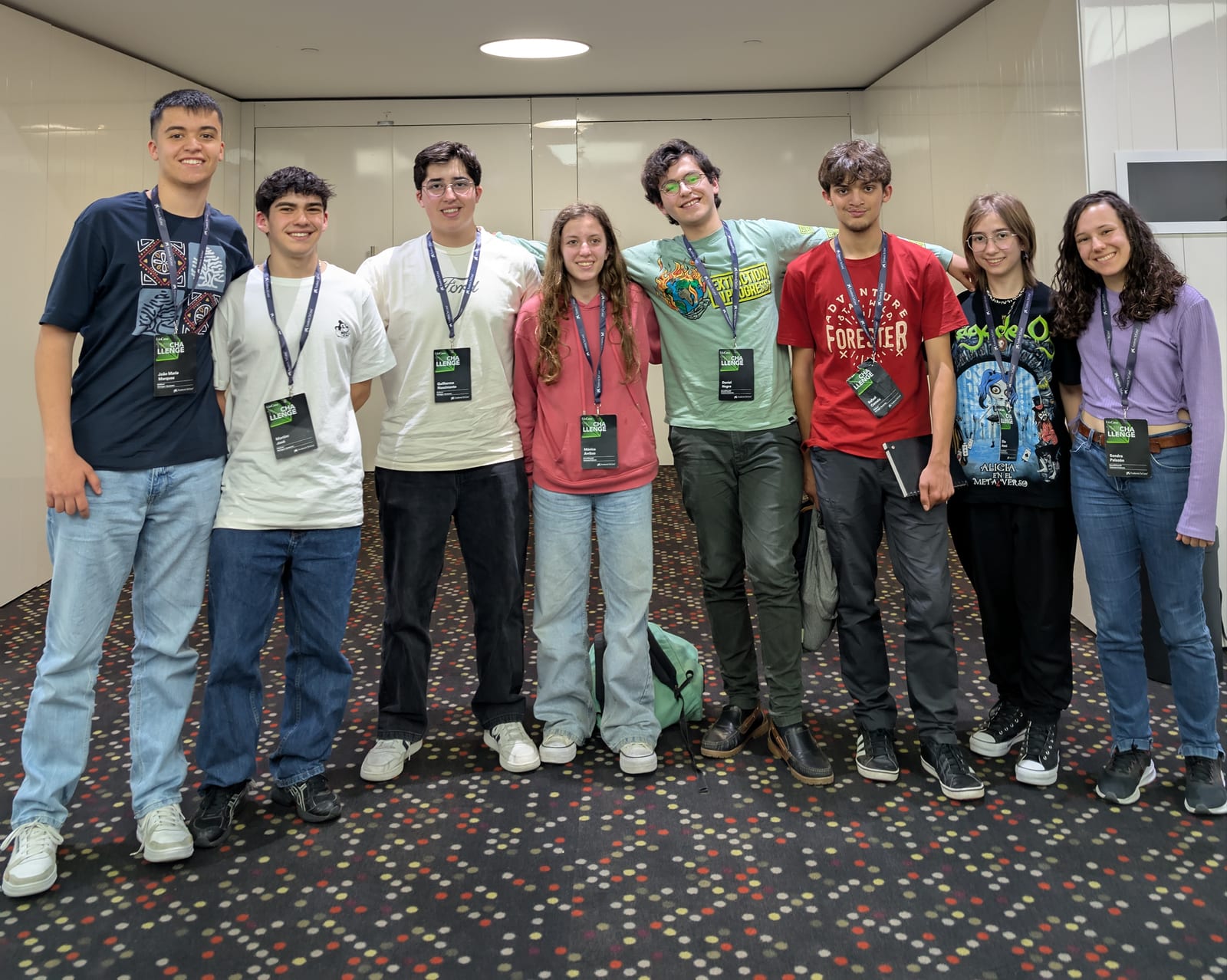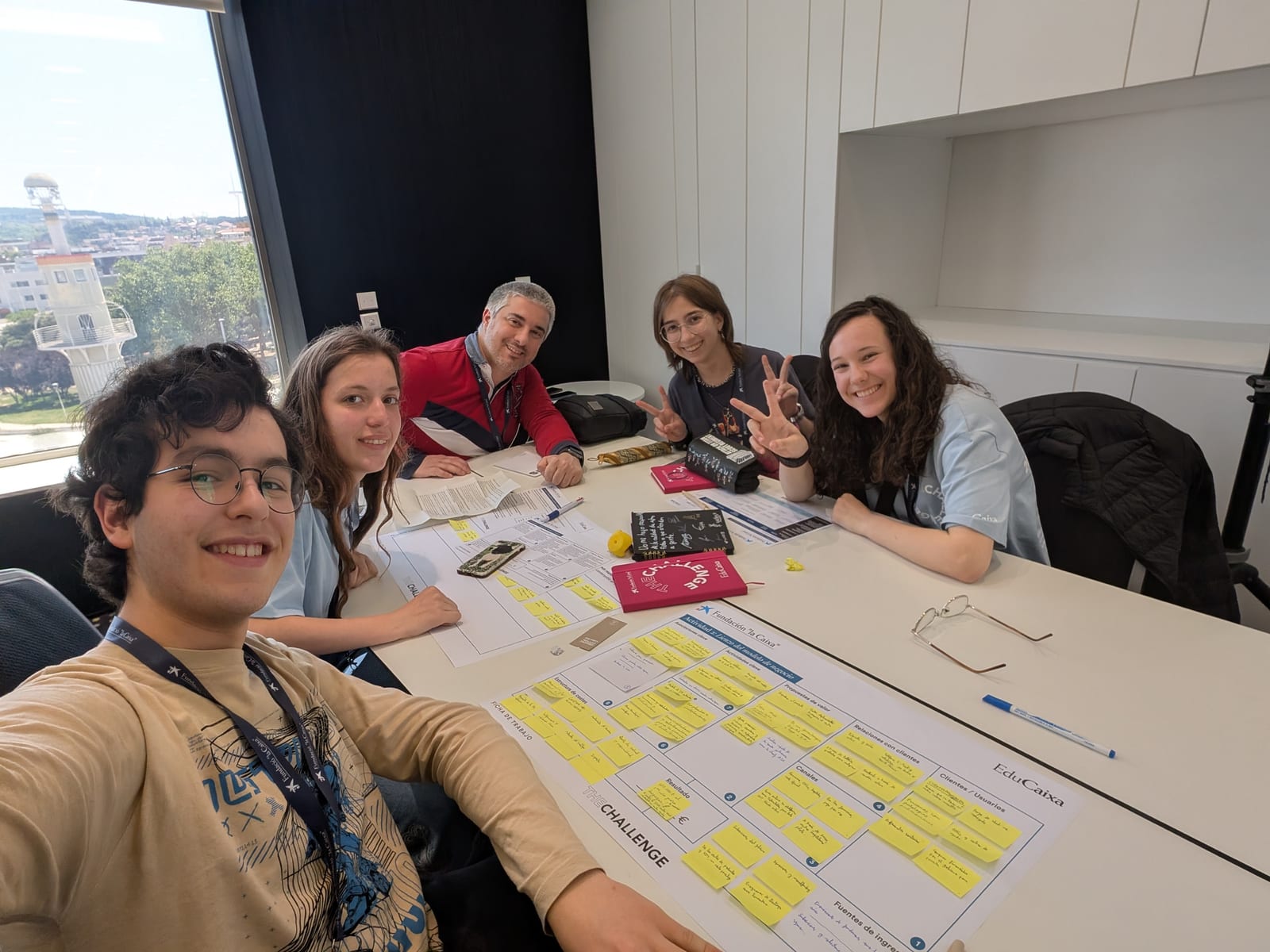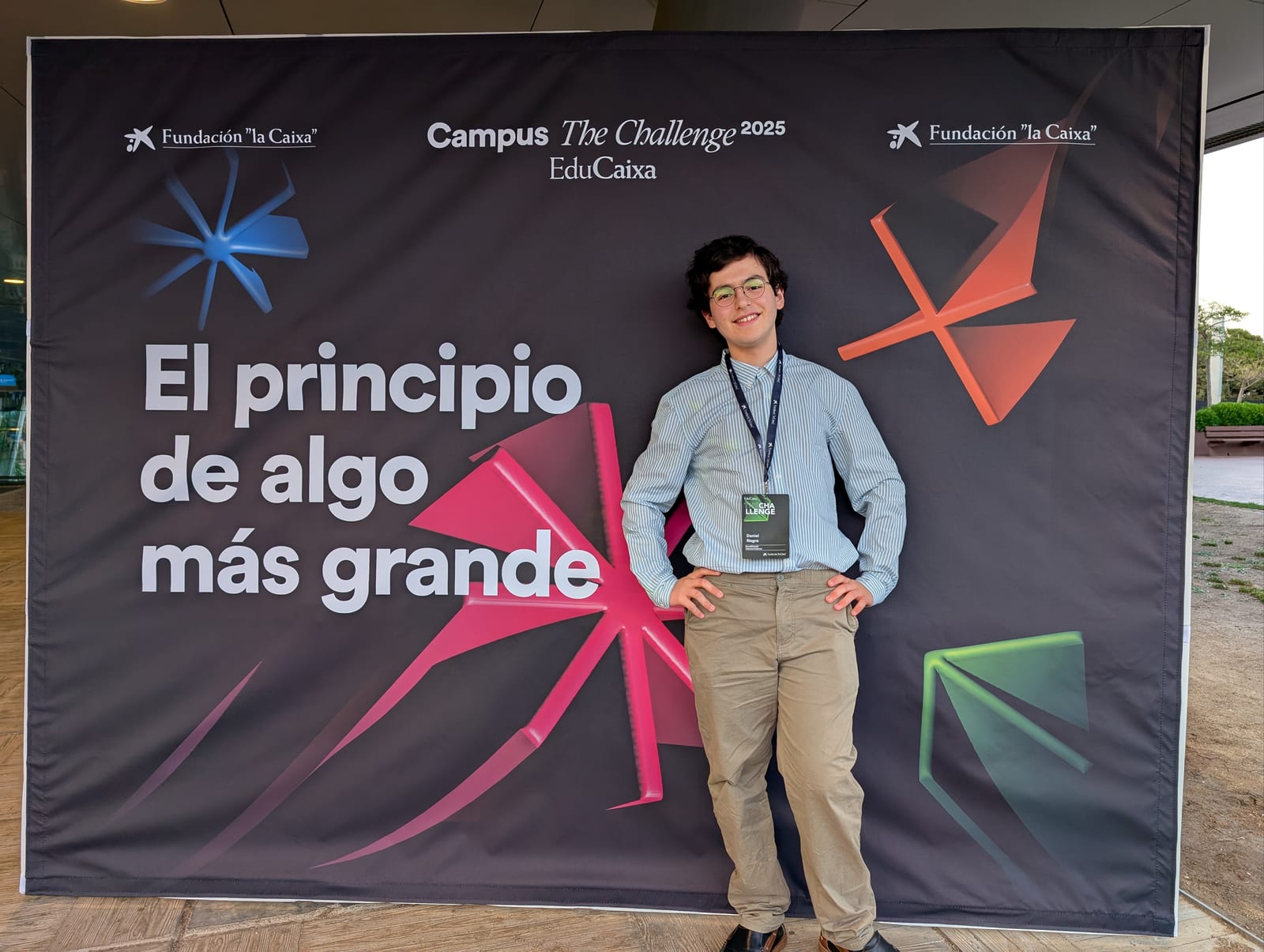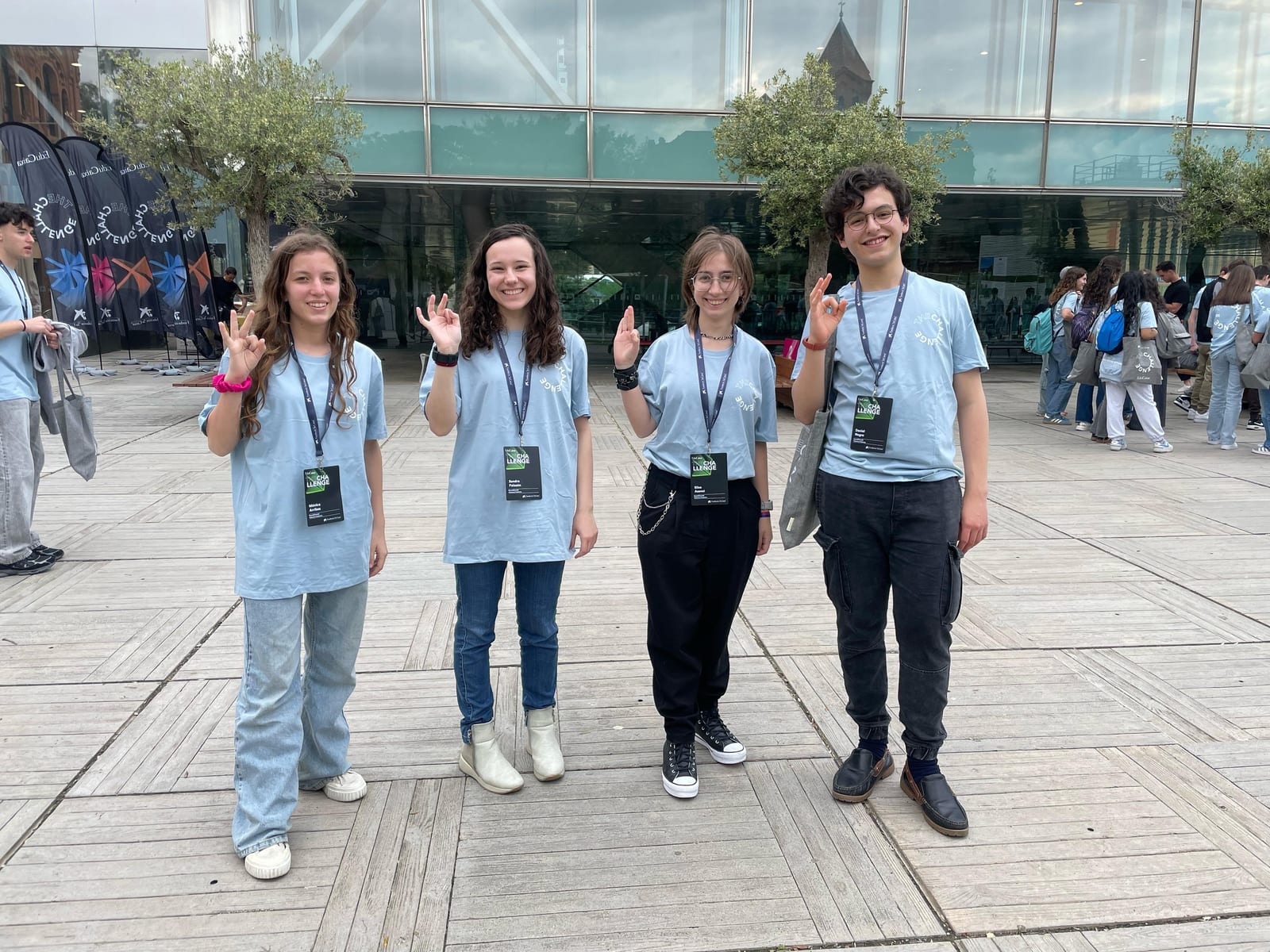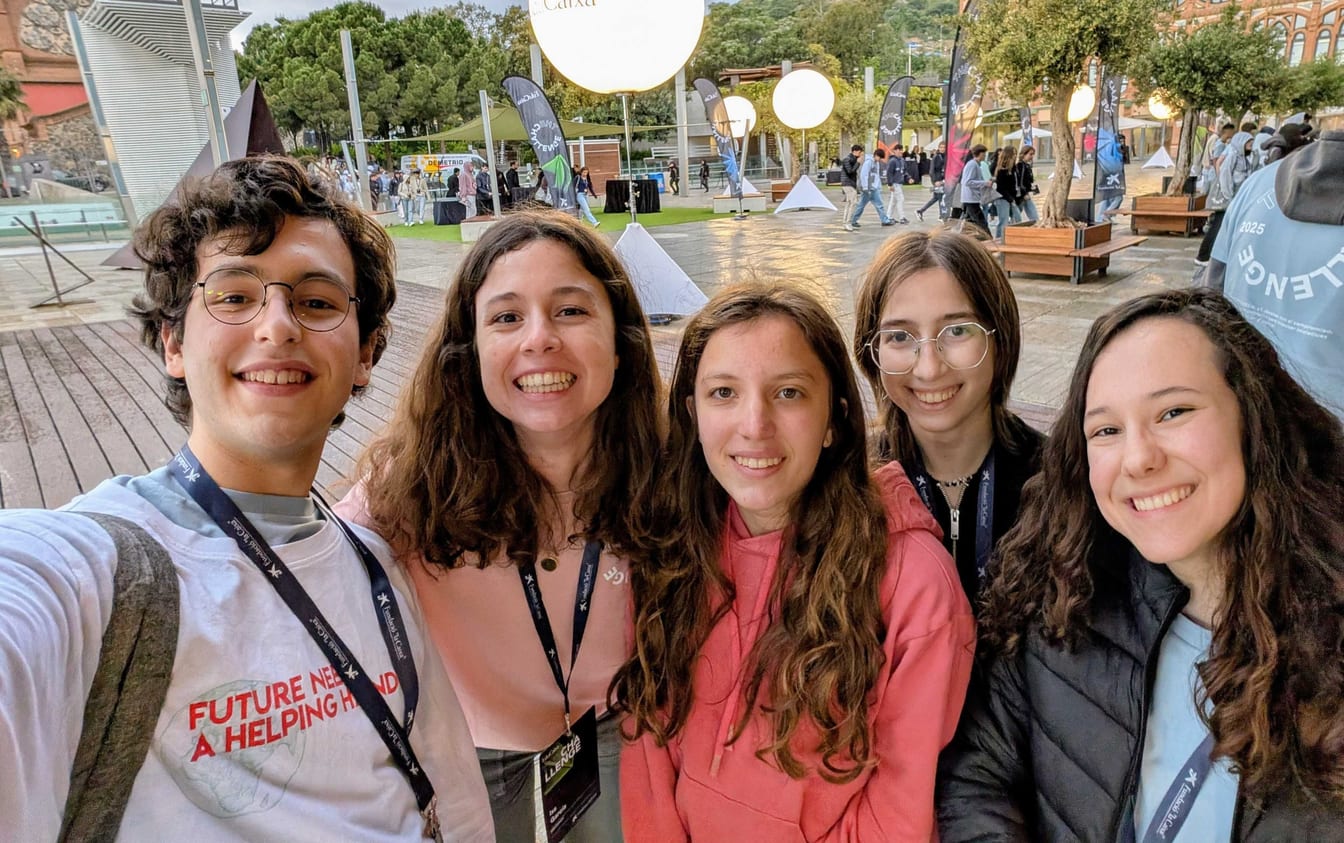
In May 2025 I presented SoundChestAI at The Challenge's Barcelona campus, as one of 100 teams selected from 2,034 projects across Spain and Portugal.
SoundChestAI is a DIY digital stethoscope that records lung sounds and classifies them with a custom model. I was the team's developer, building the recording chain, model and app, alongside Sandra Palazón, Mónica Arribas and Elisa Asensi.
Around 43% of people worldwide cannot reach a health facility within an hour on foot, and respiratory diseases are among the most common causes of severe illness and death. Our device is designed to let those people know if a visit to a far-away hospital is worth it.
Our device records chest audio, classifies what it hears (wheezes, crackles...), explains what those sounds could mean, and then routes the recording to a clinician for confirmation.
We can record sounds with high precision thanks to Francisco José Martínez Zaldívar, a telecom professor at the UPV. He helped build our sound filtering engine, and without him the audio we record would only be noise.
SoundChestAI costs about 15€ to build, using only a PVC tube, an ESP32, an INMP441 mic, a Rappaport diaphragm, and a 3D-printed bell. This last one was designed by Ludosaurus, who made it cheaper to print and smaller while not distorting audio.
Other digital stethoscopes cost between 250€ and 400€, meaning they are huge expenses for individuals in rural or underdeveloped areas. Despite their price tag, they only amplify sound instead of classifying it.
Because its output is visual, it also works for users with hearing loss. To be able to present our project to those audiences directly, Josep Gimeno taught Mónica sign language.
Our dataset was labelled and cross-checked by clinical teams at Padre Jofre and Quirónsalud. Our testing indicated around 96% accuracy with our proof-of-concept dataset, but a broader rollout would require a wider dataset and testing system with validated clinical organisations.
Building SoundChestAI gave me experience with multi-modal prototypes, machine learning in a healthcare context, and presenting technical work to large audiences.
There was no 2026 edition of The Challenge and the official website is now gone, which is very sad to see. It's the only competition that's really surprised me. Branded venues, a party, merch, a museum visit... Educational but fun. If you find something similar, my advice is to participate.